Ahead of VLCAD Deficiency Awareness Day, Pittsburgh Family Launches “Be the Spark” Campaign to Advance Life-Changing Technology for Rare Disease Community
Founder
Maddie’s Spark Foundation
ashley@maddiesspark.org
423-329-6350
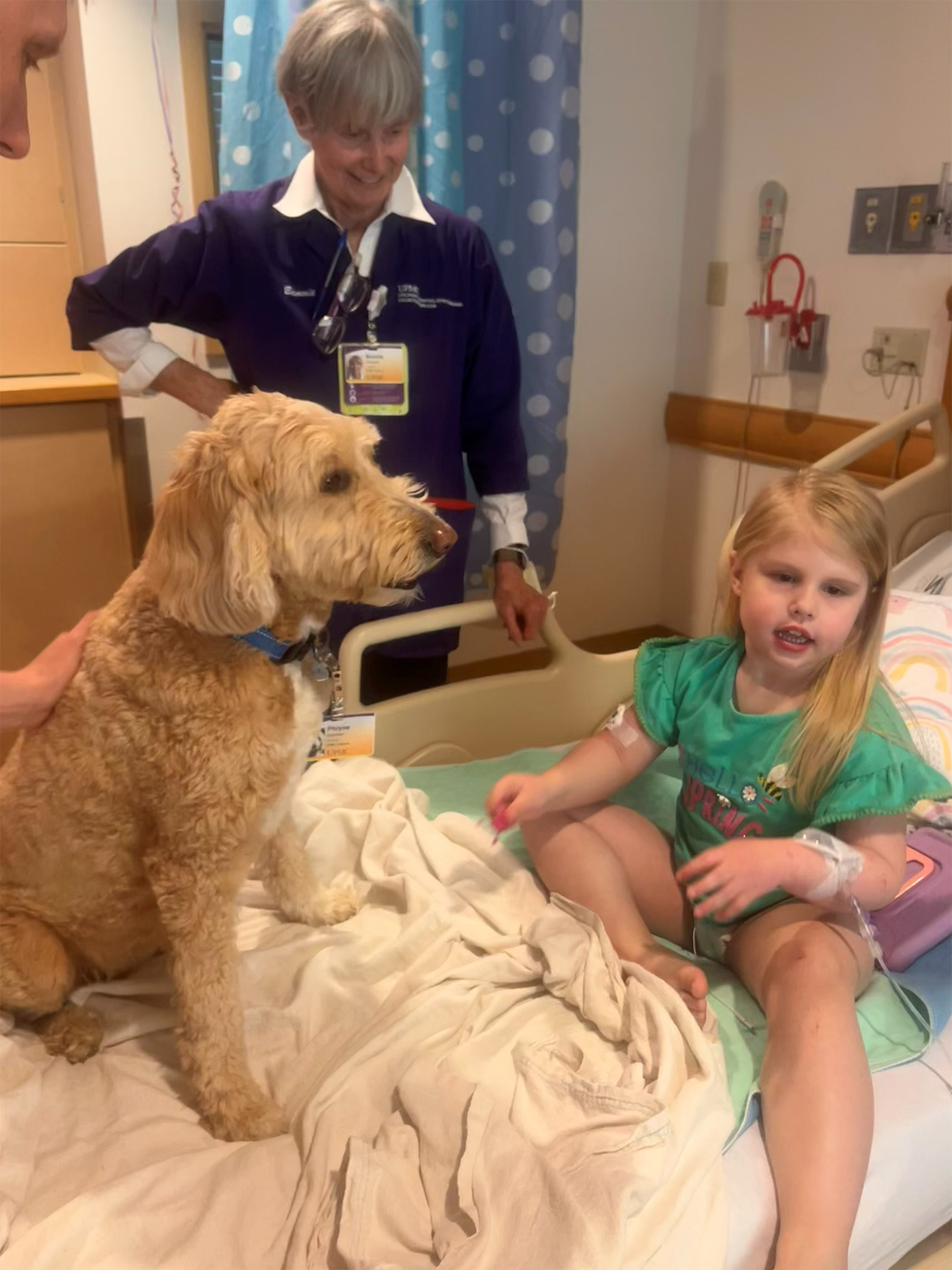
Now, they’re helping advance a first-of-its-kind wearable disease management technology they hope could change the future for children living with the same disease.
The announcement comes ahead of the inaugural VLCAD Deficiency Awareness Day on July 17, a day dedicated to raising awareness for a disorder that affects only a small number of families but carries life-threatening consequences.
What most people see is a bright, energetic little girl with a contagious smile.
What they don’t see are the daily calculations happening behind the scenes.
Did she get enough sleep?
Did she eat enough?
Will her body have enough energy today?
Could something as simple as a stomach bug, growth spurt, or active afternoon trigger another metabolic crisis?
For Maddie and her family, those questions aren’t hypothetical. They are part of life with Very Long-Chain Acyl-CoA Dehydrogenase (VLCAD) Deficiency, a rare genetic metabolic disorder that prevents the body from properly converting certain fats into energy. The condition can lead to dangerous muscle breakdown, heart complications, and life-threatening metabolic crises.
In the past year alone, Maddie has been hospitalized four times.
“Maddie’s disorder is like a puzzle every single day,” said her mother, Ashley Bauer. “We wake up and try to piece together how her body is functioning based on what we can see. Is her heart getting enough energy? Are her muscles getting enough energy? Is she heading toward a metabolic crisis? We don’t always know.”
That uncertainty led the Bauer family to make a life-changing decision.
In April 2025, they moved to the Pittsburgh area so Maddie could receive specialized care from Dr. Jerry Vockley and the metabolic team at UPMC Children’s Hospital of Pittsburgh, one of the world’s leading centers for rare metabolic disorders.
“We came to Pittsburgh looking for answers,” Bauer said. “What we found was hope.”
That hope came not only from Maddie’s care team, but from the realization that Pittsburgh is home to some of the world’s leading research focused on rare metabolic conditions.
Inspired by the care, expertise, and support they found in Pittsburgh, the Bauer family founded Maddie’s Spark Foundation, a 501(c)(3) nonprofit dedicated to raising awareness, building community, and helping advance research for individuals and families living with VLCAD deficiency and related Fatty Acid Oxidation Disorders (FAOD).
Now, as VLCAD Deficiency Awareness Day approaches, the foundation is launching its “Be the Spark” campaign and announcing the Early SparCK Initiative (https://givebutter.com/be-the-spark-for-a-cure-ymknkm), a mission to raise $100,000 to help advance an emerging continuous Creatine Kinase (CK) disease-management device toward future clinical trials through research efforts connected to Dr. Jerry Vockley at UPMC Children’s Hospital of Pittsburgh.
The campaign seeks to raise awareness of a disease that most Americans have never heard of while helping fund research that could dramatically improve how VLCAD deficiency and related FAOD are managed.
This year marks the first-ever VLCAD Deficiency Awareness Day (https://www.maddiesspark.org/vlcadawarenessday) campaign led by Maddie’s Spark Foundation.
As part of the effort, the organization is honored to receive support from the Allegheny County Executive’s Office, which has issued a proclamation officially recognizing July 17, 2026, as VLCAD Deficiency Awareness Day in Allegheny County.
The proclamation represents the first local government recognition of VLCAD Deficiency Awareness Day and underscores the importance of bringing visibility to a rare disorder that remains largely unknown despite its life-threatening impact on affected families.
“We are incredibly grateful to County Executive Sara Innamorato and her team for helping shine a light on a disease that most people have never heard of,” Bauer said. “For rare disease families, awareness is more than recognition. It creates understanding, builds community, and helps bring attention to the urgent need for research and better treatment options.”
The proclamation comes as Maddie’s Spark Foundation launches its Be the Spark campaign to educate the public about VLCAD deficiency and inspire support for research initiatives that could improve the lives of patients and families around the world.
The Early SparCK Initiative is being conducted in partnership with the UPMC Children’s Hospital Foundation, helping connect community support directly to research efforts aimed at improving outcomes for individuals living with VLCAD deficiency and related metabolic disorders.
For the Bauer family, the partnership represents an opportunity to give back to the institution that changed the course of Maddie’s care.
“When we moved to Pittsburgh, UPMC Children’s gave us more than medical care. They gave us hope,” Bauer said. “For the first time, we felt like we had a team that truly understood what Maddie was facing and was committed to helping us navigate it.”
“Partnering with the UPMC Children’s Hospital Foundation allows us to support research and innovation that could change the lives of families like ours for years to come. It’s our way of giving back to the people who have given so much to us.”
For the Bauer family, the mission is deeply personal.
“There are fewer than 3,500 people estimated to be living with a long-chain fatty acid oxidation disorder in the United States,” Bauer said. “Over the years, we’ve connected with families from across the country and around the world through online support groups and the rare disease community. Those connections became lifelines for us.”
“But before moving to Pittsburgh, we had never actually met another family living with VLCAD deficiency in person. Not a child. Not a parent. No one.”
“When the team at UPMC Children’s connected us to the International Metabolic Conference in July 2025, we finally had the opportunity to meet other VLCAD families face-to-face. It was incredibly emotional. For the first time, we were surrounded by people who truly understood the hospitalizations, the uncertainty, the daily challenges, and the hope. That experience reminded us how important community is and inspired us to help build that sense of connection for other families.”
The technology being supported through the Early SparCK Initiative is being developed to continuously monitor Creatine Kinase (CK) levels and provide real-time information about changes occurring inside the body.
For families living with VLCAD deficiency and related FAOD, this disease-management device would be life-changing.
CK is a protein found in muscles and the heart that serves as an important indicator of health in individuals living with VLCAD deficiency. Elevated CK levels can signal muscle damage and heart damage and may provide an early warning that a serious metabolic crisis is developing.
Today, families often have no way to monitor CK levels outside of a hospital or laboratory setting. Instead, they are forced to make critical decisions based largely on symptoms, observation, and instinct.
If successful, the technology could become the first disease-management tool of its kind for VLCAD deficiency and related FAOD.
“Most people understand what a glucose monitor does for someone living with diabetes,” Bauer said. “Now imagine trying to manage diabetes without ever seeing your child’s blood sugar. That’s what VLCAD families face every day. They are trying to monitor muscle and heart health without a device that can help them.”
“A continuous CK monitor could give us the same kind of visibility into Maddie’s health,” she continued. “Instead of guessing, we’d have real information and real data. We could make better decisions, intervene earlier, and potentially prevent life threatening hospitalizations.”
“This isn’t just another medical device. For families like ours, it could mean the difference between catching a crisis early and ending up in the hospital for a week or more. It could mean fewer emergency room visits, fewer sleepless nights, and more time for kids like Maddie to simply be kids.”
VLCAD deficiency is one of six rare Long-Chain Fatty Acid Oxidation Disorders and affects approximately one in every 85,000 to 100,000 births. Although first identified in 1992, individuals living with VLCAD deficiency continue to face serious complications affecting the heart, muscles, liver, and kidneys.
Despite the severity of the disorder, research remains significantly underfunded, and recent reductions in federal research funding have created additional challenges for advancing promising technologies, disease-management tools, and future clinical trials.
Through the Be the Spark campaign, Maddie’s Spark Foundation is inviting individuals, businesses, healthcare organizations, schools, community groups, and elected officials to participate in VLCAD Deficiency Awareness Day to help raise awareness, share educational resources, support research, and amplify the voices of families living with this rare metabolic disorder.
“Most people have never heard of VLCAD deficiency until it affects someone they love,” Bauer said. “That’s why this Awareness Day matters. We aren’t just raising money. We’re raising visibility for children and families who are often overlooked because their disease is rare.”
“We’re thankful for the support we’ve received from the Allegheny County Executive’s Office, UPMC Children’s Hospital Foundation, and our Pittsburgh community. Every person who learns Maddie’s story, shares information, advocates for rare diseases, or supports research becomes part of the spark that moves us closer to better treatments and, one day, a cure.”
“One of the things we’ve learned since coming to Pittsburgh is that breakthroughs don’t happen in isolation,” she continued. “They happen when families, researchers, physicians, hospitals, donors, and communities come together around a shared goal. That’s exactly what we’re trying to do through the Be the Spark campaign.”
“Every hospitalization has reminded us how fragile life with VLCAD can be,” Bauer said. “But every breakthrough, every connection, and every person who joins this mission reminds us how much hope there is for the future.”
For the Bauer family, this effort is about more than research funding.
It’s about creating a future where children like Maddie spend less time in hospital beds and more time being kids.
“We know this technology won’t just help Maddie,” Bauer said. “If successful, it could help families across the country and around the world. Every child deserves the chance to live their life instead of constantly fighting to stay healthy enough to enjoy it.”
To learn more about VLCAD Deficiency Awareness Day, the Be the Spark campaign, or the Early SparCK Initiative, visit www.maddiesspark.org.
The Bauer family is available for interviews and can share their experience relocating to Pittsburgh for specialized care, navigating 20 hospitalizations before Maddie’s fifth birthday, and the daily realities of managing a rare metabolic disorder. Visual opportunities include family photos, hospital journey images, awareness campaign activities, emergency care preparations, and a firsthand look at the daily routines and emergency planning required to manage a life-threatening rare disease.
Be the Spark (VLCAD Deficiency Awareness Day) Campaign Resources https://www.maddiesspark.org/s/2026-Be-the-Spark-Toolkit-VLCAD-Awareness-Day.pdf